

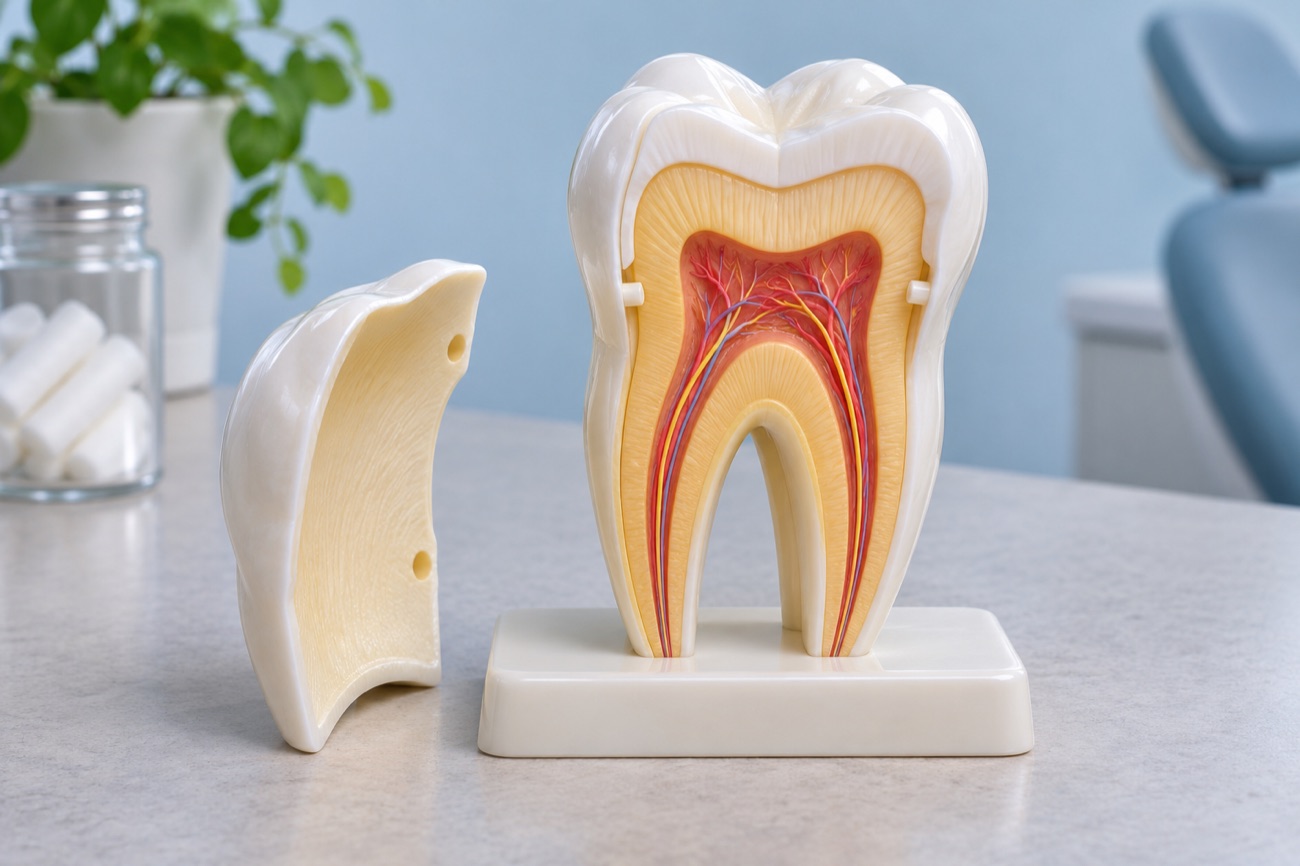
Root canal treatment aims to preserve a natural tooth when its pulp is irreversibly inflamed or has lost vitality. The pulp contains blood vessels, nerves and connective tissue. Treatment involves cleaning, shaping and filling the root canals.
Preserving a natural tooth where possible can maintain chewing function as well as address pain.
In my Biofunctional Dentistry approach, I consider the tooth's long-term function as well as current symptoms. Whether it can be saved depends on clinical examination and any necessary imaging.
What Is Root Canal Treatment?
A tooth has an outer layer of enamel, dentine underneath and pulp at its centre. Pulp supports tooth development and sensation. Deep decay, trauma or other causes can irreversibly inflame the pulp or cause it to lose vitality. Root canal treatment cleans, disinfects and fills the root canal system. An appropriate restoration then replaces lost structure in the visible part of the tooth.
When Is It Needed?
Root canal treatment may be considered for:
- Irreversible pulp inflammation
- Loss of pulp vitality
- Infection around the root tip originating from the pulp
- Pulp involvement due to deep decay
- Certain dental injuries
- Cases requiring retreatment of a previous root canal
Some teeth with deep decay can receive treatments that preserve the pulp. My aim is to choose the most conservative, predictable option for the condition of the tooth.
What Symptoms Can Occur?
Spontaneous toothache
Pulp disease can cause pain that starts without a trigger.
Lingering pain after heat or cold
Pain that continues after the stimulus is removed should be assessed.
Pain when chewing
Involvement of tissues around the tooth can cause tenderness when chewing.
Gum swelling or drainage
These can occur with certain infections.
Tooth discolouration
A tooth can change colour, especially after trauma.
These signs require assessment to determine the cause. Some teeth that need root canal treatment cause little noticeable pain.
What Is Assessed Before Treatment?
Source of pain
The clinician identifies the tooth or tissue causing symptoms. Problems in the chewing muscles, jaw joint or neighbouring teeth can resemble toothache.
Pulp condition
Cold testing and other appropriate clinical tests help assess the pulp.
Roots and surrounding tissues
Radiographs help assess the roots and surrounding bone.
Whether the tooth can be preserved
The clinician evaluates sound tooth structure, possible cracks or fractures and periodontal support. Long-term restorability also matters when root canal treatment is technically possible.
How Is Root Canal Treatment Done?
1. Diagnosis and planning
The clinician carries out an examination, clinical tests and imaging as needed.
2. Local anaesthesia
The treatment area is numbed when needed.
3. Isolation
The tooth is isolated from saliva so treatment can be carried out safely. A rubber dam is an important standard in endodontic treatment.
4. Accessing the canals
The clinician gains access to the canal system inside the tooth.
5. Cleaning
Infected or damaged tissues are removed and the canals are cleaned using mechanical and chemical methods.
6. Shaping
The canal system is prepared for filling.
7. Filling the canals
The canals are filled with suitable materials.
8. Restoring the tooth
The lost structure is replaced with an appropriate filling, onlay or crown.
How Long Does It Take?
Duration depends on canal anatomy, infection and whether this is initial treatment or retreatment. Some cases take one visit and others require more. Complex anatomy, existing infection and replacement of an earlier root filling can affect the timeline.
Is a Crown Needed Afterwards?
The restoration depends on how much tooth structure remains, the tooth's position and mechanical requirements. A back tooth with extensive tissue loss may benefit from a restoration that covers its cusps. A more limited restoration can suit some teeth with sufficient sound structure. The final restoration should protect the tooth over the long term.
Why Does Function Matter?
Teeth experience forces during chewing. Existing loss of tooth structure affects how a treated tooth handles these forces. The remaining tissue and chewing loads should guide restoration design. Fracture risk depends largely on remaining structure and restoration characteristics.
What Are the Benefits?
- Preserving the natural tooth in suitable cases
- Controlling infection originating in the pulp
- Maintaining chewing function once the tooth is appropriately restored
- Potentially avoiding the need for an implant or bridge after extraction
What Are the Limitations?
Root fractures, advanced loss of periodontal support or insufficient restorable structure may limit treatment options. Complex canal anatomy can make treatment more difficult. The treated tooth may still develop problems over time.
What Are the Risks?
- Temporary pain after treatment
- Persistent or recurring infection
- Inability to reach the entire root canal system
- Instrument separation inside a canal
- Cracks or fractures in the tooth or root
- Need for retreatment
- Later extraction
Risk depends on the tooth's condition and the treatment.
What Are the Alternatives?
Options depend on the tooth. Vital pulp therapy may be considered when the pulp can be preserved. Previously treated teeth may be eligible for retreatment or, in selected cases, endodontic surgery. A tooth that cannot be saved may need extraction. An implant, bridge or other prosthetic option can then be considered.
What Should I Do After Treatment?
Temporary sensitivity can occur. Avoid heavy force from hard foods, especially before the permanent restoration is in place. Keep up normal oral care and attend follow-up appointments recommended by your clinician.
When Is Urgent Assessment Needed?
Contact a dentist promptly for rapidly increasing facial swelling, fever, pronounced malaise or worsening pain. Difficulty breathing or swallowing, significant swelling in the floor of the mouth or signs of a rapidly spreading infection require emergency medical assessment.
What Affects the Cost?
Cost depends on the number and anatomy of the canals, whether treatment is initial or repeat, and additional procedures. The final restoration also affects the total. An estimate can be given after examination and planning.
Frequently Asked Questions
1. Is root canal treatment painful?
The clinician aims to control pain with appropriate anaesthesia. Temporary sensitivity can occur afterwards.
2. How many visits are needed?
One or more visits may be required depending on the tooth.
3. Can a treated tooth hurt again?
Yes. Persistent or new problems can cause pain.
4. Is the tooth dead after treatment?
The pulp is removed, and the tooth remains connected to the living tissues around it.
5. Can a treated tooth still be extracted?
An extraction may become necessary later in some cases. Long-term retention cannot be guaranteed.
6. Is a crown essential?
Restoration choice depends on remaining tooth structure and clinical conditions.
7. What happens if treatment fails?
Retreatment, endodontic surgery or extraction may be considered.
8. Can a treated tooth decay?
Yes. The remaining natural tooth structure can develop new decay.
9. Can I eat after treatment?
Eat once the anaesthesia wears off, following your clinician's instructions.
10. Can I have an implant instead?
Assess whether the tooth can be preserved before deciding on extraction and implant placement.
11. Are antibiotics needed afterwards?
The need for antibiotics is determined by the clinical situation.
12. How long will the tooth last?
That depends on its starting condition, the restoration and ongoing care.