

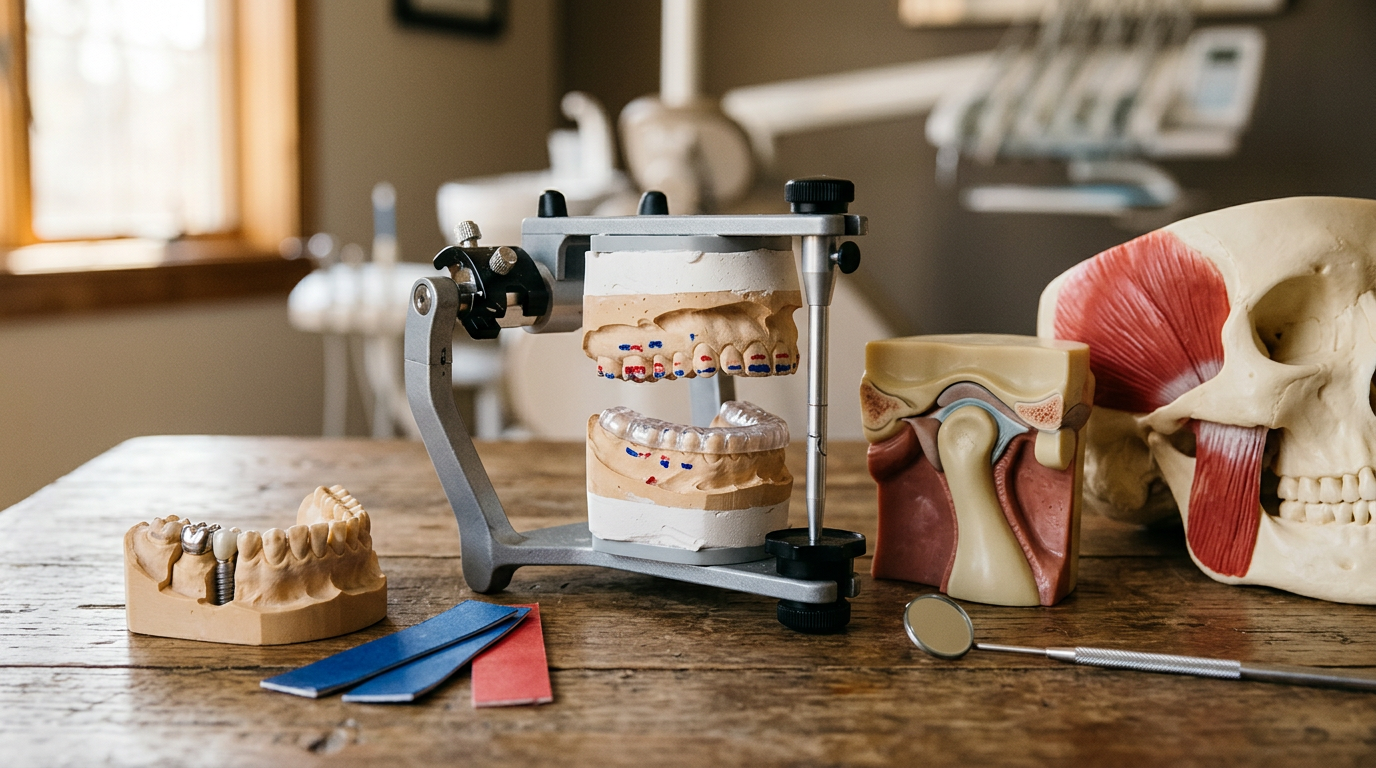
Treating clenching involves more than making a night guard. A guard can be an important protective tool, but causes, patterns, findings and effects vary, so treatment cannot follow one fixed prescription. Planning aims to protect and balance the chewing system.
Treatment aims to develop an individual plan that protects the teeth, jaw joint, muscles, bite and restorations together, alongside managing clenching.
A biofunctional approach assesses sleep or awake activity, bruxism signs, wear, muscles, joint, bite, restorations and daily habits together.
How Is Sleep Clenching Treated?
The main aim is reducing damage to teeth, restorations, muscles and the joint because patients cannot consciously stop clenching while asleep. Options include custom guards, splints, wear monitoring, bite analysis, review of sleep habits and caffeine, alcohol and nicotine, joint and muscle examination, restoration protection and sleep medicine assessment where needed. Advice simply to avoid clenching is insufficient during sleep. Care centres on protection and monitoring.
How Is Awake Clenching Treated?
Awareness is central because patients can learn to recognise the behaviour while awake. Stress, concentration, desk work, posture and habits are commonly involved. The reminder is “lips together, teeth apart, jaw relaxed”. Desk breaks, posture adjustments, stress management, screen height and checking tooth contact can help. A night guard alone does not change daytime behaviour. Learning to notice and relax the jaw is central.
Night Guard or Splint?
Selection depends on findings. A custom guard may suffice for protection where there are no prominent joint symptoms. A splint may be more appropriate with locking, joint pain, spasm or bite uncertainty because it supports more controlled assessment of the joint, muscles and bite. Guards focus on protection, while splints may also serve assessment and treatment purposes. Neither should be routinely prescribed to everyone.
Can Ready-made Guards Be Used?
Standard guards require caution because tooth arrangement, bite, joint status and muscles differ. Poor fit may create one-sided contacts, disturb the bite, increase muscle activity or joint pain, cause tooth movement, mask the source of pain or produce long-term occlusal problems. Appliances should be custom-made and reviewed regularly. Short-term comfort does not establish long-term suitability.
Why Is Bite Analysis Needed?
Occlusion is the relationship between the upper and lower teeth. Clenching forces pass through these contacts to teeth, restorations, muscles and the joint. Premature contacts, high fillings or crowns, wear-related changes, problems with front or canine guidance, and traumatic sideways contacts affect loading. The bite is not the sole cause of every case, but assessment helps explain force distribution and local wear or fracture. It is particularly important with broken restorations or TMJ symptoms.
What If Teeth Are Worn?
The load causing wear should be assessed before merely repairing surfaces. Examination considers active wear, flattened front teeth, worn canines, loss of back-tooth surfaces, sensitivity and vertical dimension. Guard or splint needs, bite balance and restorative treatment are planned together. Restorations may also wear or break if loading remains unmanaged. Protection and function are therefore considered together.
What If Restorations Keep Breaking?
Repeated fractures of fillings, crowns, veneers, zirconia, e.max, bonding or implant-supported prostheses require assessment of clenching and loading. Relevant questions include repeated fracture location, guard use, bruxism signs, contact balance, traumatic sideways contacts, material suitability, tooth support, joint and muscle findings and splint needs. Understanding the cause is important because repeated replacement under the same loads may fail again, affecting costs and long-term outcomes.
How Is Clenching Managed With Implants?
Implants lack the periodontal ligament through which natural teeth sense forces, so force distribution and protection require careful planning. Contacts, guard needs, screws, porcelain fractures, opposing tooth wear, joint and muscle findings and chewing force balance should be monitored. Clenching does not make implants impossible, but it calls for appropriate planning and protection to reduce load-related problems.
Is Botulinum Toxin Used?
It may be a supportive option in selected patients with an overactive masseter, marked muscle pain, pronounced morning fatigue, enlarged muscles or persistent muscle pain despite a guard. It does not completely stop clenching, protect teeth by itself, replace a guard or splint, resolve bite problems or correct a joint disc problem. Selection depends on muscle findings, pain and overall assessment.
Are Physiotherapy and Sleep Assessment Needed?
Physiotherapy may help selected patients with marked muscle pain, neck and shoulder tension or posture problems through relaxation, posture work and exercise. Sleep assessment becomes important with heavy snoring, suspected breathing pauses, waking tired, daytime sleepiness, morning headaches, dry mouth, frequent waking, poor-quality sleep or grinding sounds. A night guard does not treat sleep-related breathing problems. Relevant medical assessment and collaboration may be needed.
Are Medicines Used?
Medicines may provide short-term support for pain, spasm or inflammation on a clinician’s advice. They do not independently treat clenching. Patients should avoid prolonged self-medication with painkillers or unsupervised muscle relaxants and disclose all medicines because some may increase bruxism. Medication can reduce pain without stopping tooth wear. It is one possible supportive step in managing the effects on the chewing system.
What Can Patients Do?
During the day, remember “lips together, teeth apart”, notice contact, avoid gum chewing and forceful chewing of hard foods, avoid trying to crack the jaw, relax the shoulders and review caffeine and alcohol habits. Use prescribed appliances regularly and attend reviews. Report changed symptoms, new pain or broken restorations. These measures support treatment and may help reduce loading.
Conclusion — How Is Teeth Clenching Treated?
Planning considers sleep or awake activity, bruxism findings, wear, muscles, joint, bite, restorations and habits together. Guards, splints, awareness, bite analysis, monitoring, protective restoration planning, physiotherapy, sleep assessment or selected use of botulinum toxin may form part of care. No single option suits everyone. The aim is an individual plan to protect and balance the entire system.
Clenching treatment asks how the chewing system can be protected and balanced.
Clinician’s note: This article provides general information. Assessment should consider sleep and awake clenching, wear, muscles, joint, bite, restorations, sleep and habits together. A guard may be protective but insufficient alone. Pain, joint symptoms, locking, fractures, a changed-bite sensation or advanced wear may require splints, bite analysis, physiotherapy, sleep assessment or other support selected after examination. The plan is individual.
Frequently Asked Questions
How is teeth clenching treated?
Treatment assesses wear, muscle pain, joint findings, bite, sleep or awake activity and restorations. Guards, splints, awareness, bite analysis, physiotherapy or botulinum toxin may be planned individually.
Is a night guard enough?
Sometimes. Joint pain, locking, muscle spasm, uncertainty in the bite or broken restorations may require more than a guard.
Does a night guard stop clenching?
No. It does not completely stop the behaviour, but helps protect teeth and restorations. Bruxism and the bite should also be assessed.
Are splints used?
Yes. A splint may be included where joint pain, bite uncertainty, locking or muscle pain is present. It is not identical to a simple night guard.
Is botulinum toxin necessary?
Not for everyone. It may be considered as support for an overactive masseter and marked muscle-related pain, but does not replace guards, splints or bite assessment.
Why does the bite matter?
Clenching forces pass through tooth contacts to teeth, restorations, muscles and the joint. High contacts, wear or broken restorations require bite assessment.
What happens without treatment?
Some patients develop wear, sensitivity, enamel cracks, broken fillings or crowns, muscle pain, TMJ symptoms or a need for more extensive restoration.
Which clinician should assess clenching?
A dentist able to assess bruxism, TMJ problems, occlusion and chewing muscles should examine it. Sleep, neck, posture or systemic findings may require collaboration with other specialties.