

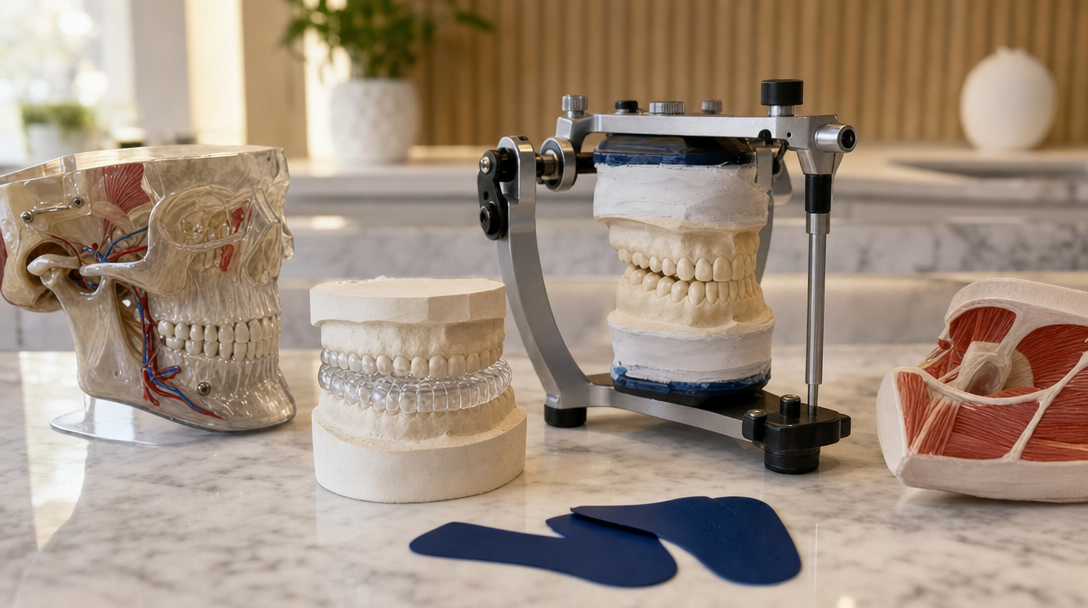
TMJ treatment aims to assess and manage pain, noises, restricted movement, locking, muscle fatigue and functional problems involving the temporomandibular joint, which connects the lower jaw to the skull.
The jaw joint does not work in isolation. Teeth, chewing muscles, occlusion, clenching habits, head and neck posture, sleep quality and daily function can affect it. Treatment should therefore consider more than the joint alone.
The priority in TMJ treatment varies between patients. For some it is pain reduction, for others improved mouth opening or management of clenching loads.
When a patient has jaw joint symptoms, important questions include whether pain comes from the joint or muscles, whether clenching or bruxism is present, whether the jaw makes noises, and whether opening is restricted or the jaw locks. Tooth wear, the balance of bite contacts, associated headache or pain in front of the ear, the need for a night guard or splint, and the need for physiotherapy or medical assessment also matter. TMJ treatment is therefore an individual assessment and follow-up process rather than a standard single-method treatment.
What Is the Jaw Joint?
The jaw joint lies between the lower jawbone and the temporal bone of the skull. Its medical name is the temporomandibular joint, abbreviated to TMJ. It enables us to open and close the mouth, speak, chew, yawn, swallow, and move the lower jaw forwards and sideways.
It combines rotation with sliding rather than working as a simple hinge, making it one of the body’s most complex joints. Healthy function requires coordination between the teeth, muscles, joint disc and bite.
What Is a Jaw Joint Disorder?
A jaw joint disorder involves pain, noises, restricted movement or impaired function affecting the TMJ and surrounding muscles. It may arise from the joint, the muscles or both.
The joint, disc, capsule, connective tissues, masseter, temporalis and pterygoid muscles, teeth, bite, and head and neck muscles may be involved. Looking only at joint noise or only at pain is therefore insufficient.
Which Symptoms May Lead to TMJ Treatment?
Treatment may be considered for jaw joint pain, pain in front of the ear, clicking or popping, deviation during opening, difficulty opening, locking, pain when chewing, morning jaw fatigue, temple pain, headache, clenching, grinding, tooth wear, a feeling that the bite has changed, tight jaw muscles or facial fatigue. These symptoms do not always have the same cause, so proper assessment before treatment is essential.
What Causes Jaw Joint Pain?
Jaw joint pain has many possible causes. Sometimes it comes directly from the joint, sometimes from the chewing muscles, and sometimes it is related to the teeth or bite.
Possible causes include clenching, bruxism, overworked jaw muscles, joint disc problems, capsule tenderness, bite imbalance, a high filling or crown, trauma, one-sided chewing, prolonged gum chewing, straining the jaw with hard foods, stress and muscle tension, neck and posture problems, joint degeneration and inflammatory conditions. Several may coexist in the same patient.
What Is the First Step in TMJ Treatment?
The first step is working towards an accurate diagnosis. Treatment without understanding the cause of jaw pain may not provide lasting results.
Initial assessment considers the location and duration of pain, its relationship to chewing, jaw movement, mouth opening, joint noises, locking history, clenching signs, tooth wear, muscle tenderness, bite contacts, existing fillings, crowns and implants, headache or pain in front of the ear, sleep quality and stress factors. The treatment plan follows this assessment.
How Is a Jaw Joint Examination Performed?
An examination assesses the teeth, muscles, joint and bite together, rather than simply inspecting the painful area. It considers mouth opening and any pain or restriction, the path of jaw movement and any sideways deviation, and joint noises such as clicks, crackling, popping or grinding. Muscle palpation checks tenderness in the masseter, temporalis and other chewing muscles. Joint palpation assesses symptoms in front of the ear that change with movement. Tooth and bite analysis checks premature contacts, wear, high fillings and broken restorations. Signs of clenching include tooth wear, tongue-edge indentations, lines inside the cheeks and morning jaw fatigue. Imaging, photographs, digital scans, bite records or multidisciplinary assessment may be added when needed.
How Is TMJ Treatment Planned?
Treatment depends on the patient’s findings. Options include education, advice on resting the jaw, awareness of daytime clenching, a night guard, splint therapy, bite analysis, checks for high fillings or crowns, jaw exercises, physiotherapy, reducing hard foods and gum, assessment of sleep and stress, restorative or prosthodontic planning, and medical or surgical assessment where necessary. The goal is to balance loads within the chewing system as well as reduce pain in the short term.
What Does a Splint Do in TMJ Treatment?
A splint is a custom intraoral appliance commonly used in TMJ treatment. It fits over the teeth and helps make the relationship between muscles, the joint and bite more controlled.
Its purposes may include reducing the effects of clenching, supporting relaxation of the jaw muscles, managing joint loading, organising bite contacts, evaluating lower jaw position, monitoring response and testing the system before restorative treatment. A splint should not be regarded as a device that permanently puts the jaw “back in place”. A correctly designed splint can help manage loading and clarify the response to treatment.
Is a Night Guard the Same as TMJ Treatment?
No. A night guard generally protects the teeth from damage caused by clenching and grinding. TMJ treatment is broader and considers the joint, chewing muscles, clenching, bite, jaw movements and, where relevant, posture and physiotherapy together.
A night guard may be sufficient for some patients. Joint noises, locking, difficulty opening, pain in front of the ear, severe muscle tenderness, increased pain with a guard, advanced tooth wear or bite imbalance may require a splint or more comprehensive TMJ assessment.
Why Does Occlusion Matter in TMJ Treatment?
Occlusion describes contact between the upper and lower teeth. The jaw joint, muscles and tooth contacts are related, so assessing the bite is important.
Assessment considers balanced contacts, premature contacts, high fillings or crowns, traumatic contacts in sideways movement, tooth wear, concentration of clenching forces, risks to restorations and how contacts should be planned in a splint. The bite is not the sole cause of every jaw joint problem, but it is an important part of assessment in patients with TMJ problems, clenching and muscle pain.
How Is Clenching Assessed?
Clenching commonly increases loading in patients with jaw joint problems. Patients may be unaware of sleep clenching, so their account alone may be insufficient.
Signs include morning jaw fatigue, tooth wear, sensitivity, a firm masseter muscle, temple pain, grinding sounds during sleep, broken fillings or crowns, tongue-edge indentations and bite lines inside the cheeks. When clenching is present, a night guard, splint, daytime awareness, stress management, sleep assessment and bite analysis may be considered together.
Are Exercises Needed?
Exercise may help some jaw joint problems. The same exercises are not appropriate for everyone, and incorrect exercises can increase pain. They may help organise jaw movement, support muscle coordination, improve control of opening, reduce tension and support functional movement. In patients with locking, pain or joint noises, exercises should be planned after an examination.
Is Physiotherapy Needed?
Some patients benefit from physiotherapy, particularly when muscle-related pain, neck and posture factors, restricted movement or longstanding symptoms are present. It may be considered for marked jaw muscle pain, associated neck and shoulder tension, limited opening, impaired movement coordination, muscle spasm or contributing posture problems. Collaboration between a dentist and physiotherapist can be important in some cases.
Are Medicines Used?
Medicines may provide support during some acute painful episodes. They are generally not the sole main solution. Pain may return if underlying clenching, bite, muscle or joint problems continue. Medication should be used on a clinician’s advice, taking general health, current medicines and medical history into account.
Is Surgery Needed?
Surgery is not the first option for most jaw joint problems. Conservative methods are considered first in many patients. Surgical assessment may be considered for advanced degeneration, serious structural damage after trauma, selected cases that do not respond to conservative care, serious mechanical problems within the joint or longstanding conditions that significantly impair function. Decisions require detailed assessment and the relevant specialist’s opinion.
How Long Does Treatment Take?
Duration varies. Acute muscle-related pain may improve sooner, while longstanding TMJ problems may need longer follow-up. Relevant factors include symptom duration, whether muscles or the joint are primarily involved, clenching severity, bite imbalance, locking, tooth wear, adherence to guard or splint use, daytime clenching, stress, sleep quality, and the need for physiotherapy or restorative treatment. A single fixed duration cannot be given for every patient.
Why Are Follow-up Appointments Important?
TMJ treatment requires follow-up, especially with a splint or night guard. Reviews assess pain, changes in opening, joint noises, muscle tenderness, balanced appliance contacts, wear marks, ongoing clenching, daytime habit changes, bite contacts and the need for additional treatment. Findings may change during treatment, so using an appliance without follow-up is inappropriate.
What Should Patients Pay Attention To?
Daily habits matter because some increase joint and muscle loading. Helpful measures include reducing gum chewing, avoiding hard foods and large bites, avoiding one-sided chewing or excessive opening when yawning, reducing pen, nail and lip biting, and keeping the teeth apart during the day with the reminder “lips together, teeth apart”. Patients should use prescribed guards or splints regularly, arrange a check if an appliance causes pain and monitor symptoms. These measures support examination and an individual treatment plan.
What Happens If a Jaw Joint Disorder Is Left Untreated?
Not every symptom progresses, and some mild symptoms may be temporary. Recurrent or worsening TMJ problems can nevertheless affect daily life. Some patients may develop chronic pain, restricted opening, locking, less comfortable chewing, increased muscle pain, headaches, pain in front of the ear, clenching-related tooth wear, broken restorations, a changed-bite sensation or reduced quality of life. Recurrent symptoms should therefore be assessed.
The Biofunctional Approach to TMJ Treatment
A biofunctional approach assesses the teeth, muscles, joint, bite, chewing pattern, posture and restorative risks together, alongside joint pain.
It considers whether pain arises from muscles or the joint, clenching, tooth wear, balanced contacts, normal jaw movement, joint noises, the need for a night guard or splint, restoration resistance to chewing forces, whether the joint can tolerate smile design or full-mouth treatment, and whether physiotherapy or another specialty is needed. The aim is to understand why the chewing system is under strain as well as relieve pain.
Conclusion — What Is TMJ Treatment?
TMJ treatment is a personalised process based on joint assessment of the temporomandibular joint, chewing muscles, teeth, bite and clenching habits. Its aim is to reduce pain, manage joint and muscle loading, support mouth opening and improve balance within the chewing system, rather than put every jaw “back in place”.
Depending on individual needs, splints, night guards, bite analysis, exercise, physiotherapy, habit modification or restorative planning may form part of treatment.
TMJ treatment is an individual process that considers the joint, teeth, muscles, bite and chewing system together.
Clinician’s note: This article provides general information. TMJ treatment is planned individually. Jaw pain, joint noises, locking, difficulty opening, clenching, tooth wear or pain in front of the ear require assessment of the joint, chewing muscles, teeth and bite together.
Frequently Asked Questions
What is TMJ treatment?
TMJ treatment is a personalised process planned by assessing the jaw joint, chewing muscles, teeth, bite and clenching habits together.
Are splints used in TMJ treatment?
Yes. In some patients, a splint can help control loading on the jaw joint and chewing muscles. The same splint is not used for every patient.
Is a night guard the same as TMJ treatment?
A night guard may help reduce damage caused by clenching, but TMJ treatment is more comprehensive. The joint, muscles, bite and habits need to be assessed together.
Can jaw joint pain go away on its own?
Some mild pain may be temporary. An examination is needed if pain recurs, the jaw makes noises or locks, or opening the mouth becomes difficult.
Do jaw noises require treatment?
Painless, stable jaw noises may not always require treatment. Assessment is important when noises occur with pain, locking or restricted mouth opening.
How long does TMJ treatment take?
Duration depends on the patient’s findings. Mild muscle-related pain may improve sooner, while longstanding TMJ problems may require longer follow-up.
Does TMJ treatment require surgery?
Surgery is not the first choice for most patients. Conservative approaches such as splints, night guards, exercises, physiotherapy, habit modification and bite assessment are considered first.
Which clinician should I see for jaw joint problems?
Assessment by a dentist experienced in TMJ problems, occlusion, clenching and chewing muscles is important. Some cases may also require ENT, physiotherapy, neurology or oral and maxillofacial surgery input.